Pagini

joi, 15 ianuarie 2015

jumping rope

Jump Rope Training

In addition to the obvious physical benefits, jumping rope is fun. There are always new footwork patterns that you can develop and practice.
But wait, it gets better.
You can purchase a quality jump rope for $5 or less. In the video clip below, you will see me spinning a rope that I bought for $3.75. You will not find a more effective conditioning tool for less than $5. To top it off, you can easily pack a jump rope with you no matter where you travel.
Unfortunately, despite the obvious benefits, most athletes outside of the boxing gym are unfamiliar with jump rope training. Many strength and conditioning coaches have replaced the jump rope with more elaborate and expensive training tools.
I have seen entire seminars dedicated to footwork and agility. Coaches charge hundreds of dollars to teach many techniques which could instead be developed with a $5 rope.
The jump rope is a tried and true method for improving conditioning and coordination. If you have never jumped rope before, you can expect a challenge. The rope can be frustrating to a beginner. You will not become proficient with the rope overnight.
It takes time and practice. It has been said before that practice is the mother of all skills. These words definitely apply to jump rope training.
Many athletes attempt the rope, get frustrated and quickly find alternative conditioning tools. Do not allow your frustration to interfere with your development as an athlete.

Getting Started

first, you need to purchase a quality rope. I recommend a light weight plastic speed rope. In my opinion, these ropes are more effective than heavier leather ropes and weighted ropes. The speed rope will allow you to maintain a much faster spinning pace. You can find a quality rope at most sporting good stores or through any boxing equipment supplier.
After locating a rope, you must determine the ideal length. Common rope lengths range from 8-to-10 feet. Most ropes that you find on store shelves will be 9 feet. A 9-foot rope will be long enough for most athletes who are 6 feet tall or shorter. Athletes over 6 feet tall may require a 10-foot rope.
Typically, you may need to adjust your rope. I often snip 2 or 3 inches off a 9-foot rope to increase its speed (per my height). One way to determine the ideal length is to step one foot in the middle of the rope. The handles should reach up to approximately armpit height.
You may get lucky and not require any adjustments to the rope. We all have unique body types however, so you must determine the ideal length for your rope. I simply caution you against trimming too much from the rope. After you cut the rope, you cannot go back and fix it. Trim one inch at a time and test each length.
Lastly, I recommend hanging your rope from a hook when you are finished using it. This will prevent the rope from becoming tangled. If you jumble the rope in your gym bag, it may develop kinks which will impede spinning speed.

Jumping Surface

After you find a good rope, you need to find a place to use it. I recommend jumping rope on a shock absorbent surface such as a wood floor, gym mat, outdoor track or tennis court. If you train at a boxing gym, you may wish to jump rope inside the ring. The ring surface is forgiving to the ankles and feet.
You can also purchase an interlocking foam mat that lies on top of your floor surface. These mats are useful if your gym has a concrete floor. The interlocking foam forms a temporary jumping surface. Try to avoid jumping rope on unforgiving surfaces such as concrete flooring.
In addition to a shock absorbing surface, you should wear a quality pair or cross-training shoes when skipping rope. I do not recommend wearing your boxing or wrestling shoes when jumping rope. Such shoes do not provide much cushion for the feet. Stick with quality cross-trainers when using the rope.

Skill First, Then Conditioning

When first jumping rope, it is important that you become proficient with the rope before using it as a conditioning tool. If you have never jumped rope before, you can expect some initial frustration. You must first view your rope sessions as skill workouts.
You need to develop skill with the rope, and then add it to your conditioning arsenal. If you try to use the rope for conditioning before developing skill with the rope, you are setting yourself up for failure and frustration.
Start with frequent, yet short jump-rope sessions. For example, start with 20-second intervals on the rope. Just try to skip for 20 seconds without tripping on the rope. Keep the intervals brief, and stop before fatigue mounts.
View these sessions as skill-based workouts. You are learning a new skill (rope skipping). The body is much more capable of learning when it is fresh, not fatigued.
Perform these skill emphasis sessions regularly. Frequent practice is recommended. Eventually, you will move past 20 seconds, and begin working with 1, 2, and 3-minute rounds. Many boxers will skip rope for several rounds during each training session. 30-to-60 seconds of rest will separate each round.
For example:
  • 6 x 3 minutes jump rope
  • Rest 60 seconds between rounds

Rope Skipping Styles

Jumping rope is as challenging as you make it. There are endless jumping patterns and styles. I've heard some trainers describe the jump rope as boring. Anyone who describes the rope as boring does not know how to jump rope. There is always a new skill that you can learn to keep the conditioning session enjoyable and challenging.
Running in place with the rope is one of the easiest rope skipping patterns to learn. You will remain stationary, lifting the knees high with each turn of the rope. You will essentially be running in place with high knees, with the addition of a fast spinning rope. This style of rope work is easy to learn, and excellent for conditioning.
Double unders are another popular skipping pattern. To perform a double under, you will make two turns of the rope for every one jump. Keep the feet together, jumping with both feet at the same time. This style of skipping is more difficult to learn.
Do not attempt double unders until you become proficient with the running in place variation. Eventually, you can begin performing one or two double unders, at the conclusion of a running in place sequence. For example, spin the rope 10 times while running in place, and then finish with 1 or 2 double unders.
Stop and repeat this sequence several times. The next step is to perform a double under without losing control of the rope. Rather than stopping after the double under, you will continue by transitioning back to running in place with the rope (without stopping). In time, you will develop the ability to perform several consecutive double unders.
To add to the coordination requirements of rope skipping, you can begin working with criss-cross patterns. You can perform a criss-cross while performing double unders or with the traditional running in place style of rope work.
To perform a criss-cross, you will cross the arms at the elbows on the downward swing of the rope. Jump through the loop of the rope that is formed in front of your body. Uncross the arms on the next downward swing. Continue to criss-cross the rope in this alternating fashion.
The criss-cross offers one way to interrupt the monotony of continuous rope skipping. You can integrate a criss-cross to spice up the rope session. You will eventually develop the skill to quickly integrate criss-crosses with high-speed rope turning.
These jump rope styles are just three of countless variations. I encourage you to develop new jumping styles (ex. one leg double unders). Continue to challenge yourself with new rope skipping patterns. Do not limit yourself to the same style of rope work (ex. running in place). Mix it up to promote improvements in coordination and agility.
One way to incorporate variety is by traveling frontward, backward, and side-to-side. For example, run in place with the rope while traveling around the perimeter of a square. Move forward, sideways (right), backward and then sideways (left), ending back at the starting point.
By incorporating frontward, backward, and lateral movement, you will improve footwork and agility, while simultaneously improving endurance.

Jump Rope Workouts

There are several options for jump rope workouts. The most obvious choice is to train with the rope for timed rounds. For example, many boxers will train with 2 or 3-minute rounds. During the round, they will alternate between faster-paced work (ex. double unders) and less-intense skipping (ex. jogging or running in place with the rope).
This style of rope work will mimic the physical demands of an actual boxing round. Each round contains intense moments (ex. throwing punches) followed by lulls in activity (ex. circling the ring).
You can use the rope to replicate these physical demands. With regular practice, you will be able to maintain a fast pace throughout the round.
Another option is to perform full speed intervals with the rope. For example, you will spin the rope as fast as possible for 60 seconds.
Stick with a full speed run in place style of spinning or double unders. There should be no lulls in activity. Maintain a full speed effort.
You can then rest 20-to-60 seconds between intervals. The amount of rest will depend largely on your level of conditioning and proficiency with the rope. Strive to improve your work rate per round, while decreasing the rest required between intervals. A sample workout could consist of 6 x 1-minute intervals, each separated by 30 seconds of rest.
Another option is to use the rope as part of a circuit training routine. You can mix and match rope work with several bodyweight exercises to develop a brief, yet intense conditioning routine.
One routine could include the following:
  • 100 Rope Turns
  • 10 Burpees
  • 10 Pushups
  • 10 Bodyweight Squats
Repeat the circuit 10 times.
For this circuit, you will work through these 4 exercises as fast as possible. Your goal is complete 10 circuits, resting only when necessary. Advanced athletes will be able to work through the entire routine without stopping.
Another option is to combine circuit work with timed rounds. For example, perform the following sequence as many times as possible during a 2 or 3-minute round:
  • 50 Double Unders
  • 5 Burpees
Perform 4 rounds, resting 1 minute between rounds.
Jump rope training can also be performed as a finisher. Simply close the workout with a 5 or 10-minute round. Work to maintain a fast pace throughout the extended interval. The use of an intense finishing movement will ensure the workout was of adequate intensity. In addition to building endurance, the finisher will enhance mental toughness.
You will be forced to 'finish' with one last display of endurance and agility. Many finishers such as a heavy sandbag carry do not require agility and coordination. The jump rope is different. It is not enough to display endurance. You must also remain cognizant of tripping over the rope.
A skill-based finisher has obvious benefits. Consider an athlete who must fight hard during one final round. It is not enough to plunge forward without skill. The athlete must display skill despite the unbearable fatigue. The jump rope is just one of many ways to train this ability.

Conclusion

The jump rope reigns among the pound-for-pound champions when it comes to a training tool that provides a quality workout without breaking the bank account. For $5, you can buy a rope that will enhance numerous physical qualities.
There is no reason to neglect such a valuable training tool. I highly recommend the addition of a jump rope to your weekly training program. You can work with the rope several days per week.

www.bodybuilding.com

joi, 18 octombrie 2012

                                                      Great ab exercise


Chest work-out! Must read

5 Chest Workouts For Mass - A Beginner's Guide!

Learn how beginners can build a massive chest! This guide discusses the chest, its function and recommended exercises. Try these 5 great chest workout programs for size!
Does your chest resemble a sheet of plywood instead of the mountains of muscle you want? Does your chest resemble a sheet of plywood instead of the mountains of muscle you have always wanted? Do you spend countless hours on the bench press with no gains in size? Have you started to think that you were just not meant to have a big chest? Well, stop right there, you're wrong ...
I can't promise you will ever have the chest of the great Arnold Schwarzenegger, but I can promise that you can make a difference to your chest and put some great size on it if you are willing to just hear me out.
In the article below, I will discuss the anatomy of the chest, its function and location in the body, and some exercises for each area of the chest. Finally, and what you have been waiting for, I will include five of my favorite workout programs to help turn your flat chest into massive slabs of muscle!

Chest Anatomy & Recommended Exercises

The chest is made up of two muscles that work together to make the chest function. The muscle are the pectoralis major and pectoralis minor. Basically, the pectoralis minor is located directly underneath the pectoralis major. Overall, these chest muscles start at the clavicle and insert at the sternum and the armpit area (humerous).
The three different functions of the chest muscles are the side arm pitching motion, the ability to bring your arm up and down at your sides, and the classic arm wresting motion. The basic recommended exercises for building up your chest include the bench press and flyes.

Chest Building Pointers

Though the chest is made up of one single mass of muscle, it should be trained like it was broken into 3 parts. The upper, middle and lower portions of the chest are stimulated best from changing the angle in which you execute the exercise.
The upper chest is best stimulated from exercises done on a 30-45% incline bench. For example incline barbell and dumbbell bench press or incline dumbbell flyes are great upper chest exercises.
The middle chest is best stimulated from exercises done on a flat bench. For example: flat barbell and dumbbell bench press or flat dumbbell flyes are great middle chest exercises.
The lower chest is best stimulated from exercises done on a 30-45% decline bench. For example: decline barbell and dumbbell bench press or decline dumbbell flyes are great lower chest exercises.
I find all areas of the chest respond best in the beginning to low (4-6) or moderate (8-12) rep ranges. Rarely, I will include higher rep ranges for beginners. I believe the heavier weight helps build a more solid foundation that beginners need. I also find that free weights should be your entire focus in the beginning, especially if chest is a weak point for you. The free weights just develop the chest a lot better than machines do, in my opinion.

(www.bodybuilding.com)

duminică, 15 aprilie 2012

Antrenament triceps!!!

Fiecare barbat viseaza sa aiba brate puternice. Pentru a putea purta cu mandrie un tricou mulat ai nevoie sa stii exercitiile care stimuleaza cel mai bine cresterea tricepsului si cum le combini.  


Multi incepatori care calca pentru prima oara in sala de forta neglijaza tricepsul si isi consuma toata energia pentru a antrena bicepsul. Pentru a avea brate mari si puternice trebuie sa lucrezi inteligent. Pentru a pompa cat mai mult sange in brate trebuie sa lucrezi bicepsul si tricepsul intr-un singur antrenament.

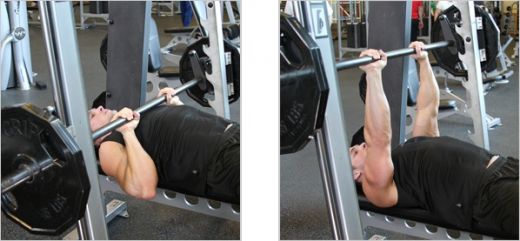
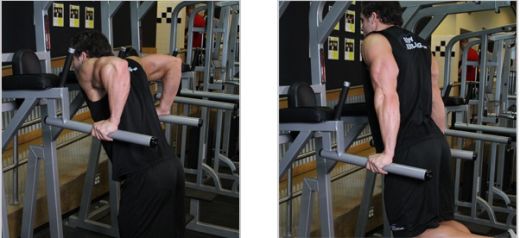
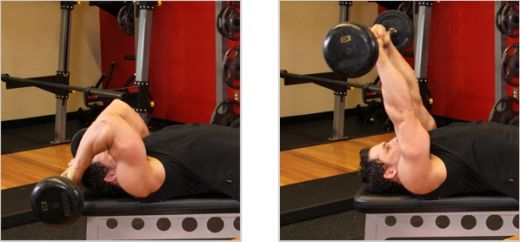
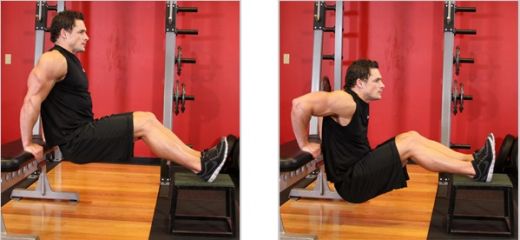
Daca esti deficitar la triceps este indicat sa incepi cu un exercitiu de baza pentru triceps. Exercitiile de baza sunt impinsul cu bara din culcat, cu priza ingusta, flotarile la paralele, extensia bratelor cu bara, din culcat, pe spate si flotarile cu spatele intre doua banci paralele.

Majoritatea culturistilor profesionisti lucreaza intre 12-15 serii pe antrenament la grupele mici (biceps, triceps, umeri, antebrat etc), intre 3-4 exercitii a cate 3-4 serii.

Se lucreaza un exercitiu cu greutati mari, la care pui destula greutate cat sa poti executa 6-8 repetari corecte, iar la urmatorul exercitiu reduci din greutate si faci cate 12-15 repetari. Mai jos aveti cateva exemple de exercitii care stimuleaza cel mai bine cresterea tricepsului.

Pentru un antrenament sanatos trebuie sa combini un exercitiu de masa (exercitiu de baza, care solicita mai multe grupe musculare si includ miscari in jurul mai multor articulatii), cu unul de izolare (exercitiu care iplica o singura articulatie) pentru fiecare grupa.

Exercitii de baza:

1) Impins cu bara la bara orizontala, din culcat, cu priza ingusta


2) Flotarile la paralele (Pentru a concentra efortul pentru triceps trebuie sa fii cat mai aplecat in fata)


3) Extensia bratelor din culcat pe spate, cu bara


4) Flotari cu spatele intre doua banci paralele


Exercitii de izolare:

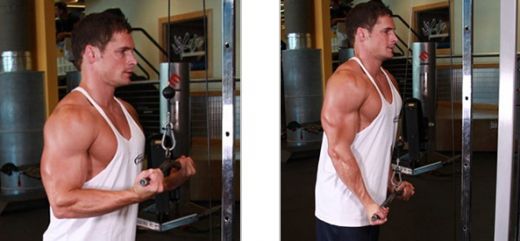
5) Extensia bratelor la scripete, cu priza tip supinatie


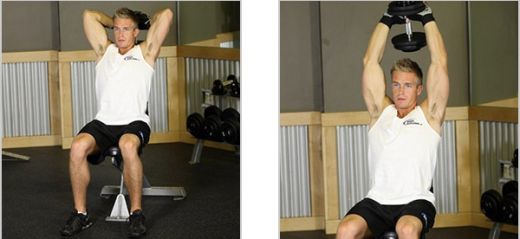
6) Extensia bratelor cu gantera


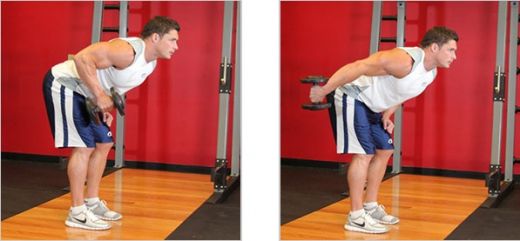
7) Extensia bratului din aplecat, cu gantera


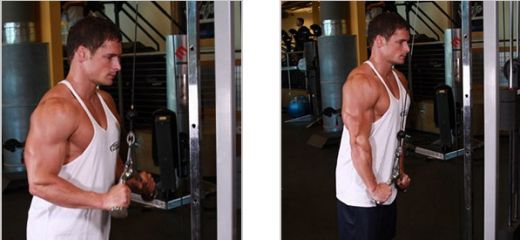
8) Extensia bratelor la scripete, cu priza tip pronatie pe bara V

miercuri, 4 aprilie 2012

Bang Out 100 Push-Ups

Even if you have no aspirations to join the Marines, you have to admit that knocking out a set of 100 push-ups at a clip would be pretty heroic—not to mention it would give you awesome upper-body strength and endurance. We asked three top coaches for a plan to get you there.
“Train three days a week. On Day 1, do 3–4 sets of weighted pushups for 12–15 reps. Day 2, bench-press for 3–4 sets of 8–10 reps. Day 3, do regular push-ups for 2–3 sets of 20–25 or more reps. Each week, increase the load on the first two days and increase the reps on the third. You’ll get there in a few weeks to a few months.”

“Find your current push-up max. Perform a push-up and pause at the top for three seconds. Then do another rep. Repeat until you’ve done half your max number. Rest for three minutes, and repeat the process until you’ve completed twice your max number of reps in total.”
Mike Scialabba, Owner of Missoula Underground Strength Training in Missoula, MT

luni, 2 aprilie 2012

Mentinerea greutatii!

 Multe persoane care incep sa faca sala doresc o definire armonica a corpului, si doresc ca dupa cateva sedinte sa se vada si progresele. Categoric este foarte dificil sa se vada niste rezultate intr-un timp atat de scurt, corpul este format pe parcursul a anii de zile, si depozitele de grasime sunt inevitabil in locurile nedorite.
 Pentru a avea niste efecte vizibile este indicat parcurgerea unor etape in stabilirea unei tinte, atat de marire de masa cat si de pierdere in greutate.
 Din acest motiv de a atinge "idealul" pe parcursul unui timp scurt de timp, conduce in majoritatea cazurilor la accidentari. Astfel, se pierde rapid dizpozitia de a mai intra intr-o sala de fitness.
 Indicat este pentru inceput sa se consulte cat mai multe informatii despre nutritie, antrenamente cat si alte lucruri esentiale pentru a duce la final planul initial.

duminică, 1 aprilie 2012

legume toxice


Cât de nocive pentru organism sunt legumele din supermarket

FOTO: Mediafax// Alexandru Solomon
Fără gust, lipsite de nutrienţi, aţoase şi chiar lemnoase, dar cu aspect frumos, aşa arată legumele pe care le cumpărăm din comerţ. "Spre deosebire de acum 20 de ani, legumele pe care le mâncăm au avantaje agronomice: sunt aspectoase, rezistă în timp şi cresc destul de repede", a declarat, pentru gândul, prof. dr. Gheorghe Mencinicopschi, directorul Institutului Naţional de Cercetări Alimentare. Specialistul atenţionează însă că, deşi punctează la capitolul imagine, legumele nu stau la fel de bine şi la capitolul beneficii aduse organismului nostru. Practic, legumele nu mai au gust pentru că provin din soiuri hibrid, speciale pentru seră. "Aceste soiuri sunt create special de om, prin selecţie artificială, pentru a avea o producţie mare de legume. Soiurile pure nu dau producţii mari. Un bun exemplu este soiul roşiilor "inimă de bou", care sunt gustoase, neaspectuoase şi cărnoase. Din păcate, acestea se deteriorează rapid şi nu au o producţie mare", spune prof. dr. Mencinicopschi.
Legumele sunt tratate chimic ca să reziste mai mult
Indiferent dacă sunt de producţie internă sau de export, legumele sunt fără gust şi nutrienţi. Ele sunt tratate chimic înainte de a ajunge pe masa noastră, iar substanţele folosite au efecte negative asupra organismului, provocând intoxicarea ficatului, a rinichilor şi a sistemului nervos central, avertizează nutriţioniştii.
Astfel, legumele sunt supuse unor tratamente cu pesticide şi pulverizate cu tot felul de substanţe toxice menite să le mărească rezistenţa în timp. "Cea mai bună soluţie este să mâncăm fructe şi legume atunci când este sezonul lor", recomandă Mencinicopschi.
Tabără: Serele din Olanda şi Spania produc sute de tone de legume pe hectar
Piaţa autohtononă este invadată pe timpul iernii de legume aduse din import. Spania, Olanda, Italia, Turcia, Israelul şi Egiptul sunt ţările de provenienţă a acestor alimente. "Legumele care se găsesc în această perioadă a anului sunt în mare parte aduse din ţări aflate în zona mediteraneană, acolo unde iernile sunt mai blânde. Roşiile şi castraveţii care se găsesc în pieţe, supermarket-uri şi hipermarket-uri sunt cu precădere din Turcia, Spania şi Olanda", a declarat, pentru gândul, Valeriu Tabără, fostul ministru al Agriculturii.
Deputatul susţine că, deşi provin din ţări unde temperaturile sunt ridicate, roşiile şi castraveţii de import sunt crescute în sere. "În Olanda şi Spania sunt sere înalte, nu ca în România scunde, unde dintr-un singur hectar se pot obţine câteva sute de tone de legume", a mai precizat Tabără.
El spune că roşiile şi castraveţii pe care îi mâncăm în sezonul rece sunt soiuri speciale pentru sere. "În Germania, de exemplu, se foloseşte un soi de castraveţi care este altoit cu unul de dovleci. Aceştia sunt mai sănătoşi, au mai multe substanţe nutritive şi sunt mai rezistenţi la bolilele specifice acestei legume. Soiul de castraveţi rezultat nu este tratat cu atât de multe substanţe chimice ca în cazul celor care nu sunt altoiţi cu dovleci", explică Valeriu Tabără.
Mai mult, contează şi modul în care legumele sunt crescute. De exemplu, în cazul roşiilor există sere speciale, iar legumele nu mai cresc în pământ, ci în substanţe nutritive. "În Olanda, de exemplu, sunt întâlnite serele cu substrat umed. Roşiile obţinute din substrat umed sunt cele care arată frumos şi sunt mari. Acestea sunt crescute în substanţe hidroponice, adică substanţe nutritive", povesteşte fostul ministru al Agriculturii.
Dacă în mod normal, anual se obţine o singură producţie, cu ajutorul serelor şi a soiurilor speciale se obţin roşii şi castraveţi şi de trei ori pe an: o dată în sezon şi de două ori în extrasezon.
Ce dezvăluie aspectul unei legume
Nutriţioniştii susţin că legumele cumpărate iarna au un conţinut mai ridicat de chimicale, comparativ cu cele pe care le cumpărăm în sezonul cald. Mencinicopschi recomandă achiziţionarea legumelor importate din ţări apropiate României. Motivul? Acestea sunt tratate mai puţin cu substanţe care să le ajute să reziste trasportului. "Din păcate, aspectul unui aliment nu ne poate spune dacă conţine sau a fost tratat cu foarte multe substanţe chimice, doar rezultatele de laborator pot arăta acest fapt", spune profesorul.
Cum să păstrezi legumele iarna
Cartofii, morcovii, ceapa şi usturoiul sunt legume care pot supravieţui chiar şi în timpul sezonului rece, important este modul de depozitare. Prof. dr. Mencinicopschi recomandă ca acestea să fie ţinute în locuri răcoroase. "Morcovii pot fi depozitaţi într-o lădiţă cu nisip, iar cartofii - îngropaţi în pământ, iar atunci când îi vom scoate vor arăta ca proaspăt cultivaţi".
Dacă nu sunt depozitaţi corespunzător, cartofii pot deveni toxici pentru organism atunci când încep să încolţească.
Pentru a evita efectele negative ale acestora trebuie înlăturate toate porţiunile înverzite şi încolţite. Partea galbenă din cartof care rămâne este sigură pentru consum.

sâmbătă, 31 martie 2012


ZIUA 1

PIEPT + TRICEPS
1. Impins din culcat cu bara: 4×16-12 – ( patru seturi a câte 16 – 12 repetări în set )
2. Impins din inclinat cu bara: 3×16-12
3.Fluturări cu gantere: 3×14-12

TRICEPS
4. Extensii la helcometru: 4×16-12
5.
Extensii cu bara din culcat: 3×10-12
6. Extensia braţelor cu o ganteră, de la ceafă, din şezând: 3×8-10
* opțional Extensia braţului, cu o ganteră, din aplecat la 90 de grade: 3×10

ZIUA 2

PICIOARE + UMERI

7. Genuflexiuni cu bara: 4×20-12
8. Fandări cu gantere: 3×12

UMERI

9. Ridicări laterale cu gantere: 4×12
10. Impins de la ceafă cu bara din poziţie aşezată: 4×12
11. Fluturări cu gantere din poziţie semi-îndoiată (pentru deltoizii din spate): 4×12

ZIUA 3

SPATE + BICEPS

12. Tractiuni la bară fixă: 4×20-12
13.
Ramat din aplecat cu bara: 4×12
14. Ramat din şezut la helcometru: 3×12

BICEPS

15. Flexii din stând cu bara 4×12
16. Flexii din înclinat cu ganterele 3×12
17. Flexii concentrate din şezut cu gantera 2×14

Prima cifră indică numărul de seturi iar a doua numărul de repetări.
Abdomenul se face la urmă în 4 seturi, primele 3 seturi 20 de repetari iar ultima serie maxim de repetari!

miercuri, 28 martie 2012

Flotarile mai usoare cu manere!!!

Pentru a usura executarea flotarilor se pot folosi manerele, care reduc efortul depus in inchieturile mainilor. Astfel puteti face mai multe repetari, si au un efect mai bun!
Costul acestora variaza intre 20-40 ron, difera producatorul si materialul folosit in confectionarea acestora.
                                                 Multe repetari!!! :)

Pentru atingerea idealul in greutate!!!


Bicicleta eliptica implica exercitii de aerobic sau cardiovasculare.


  Pentru a incepe o sedinta plaseaza-ti picioarele in locul special creat pentru ele (pedalele). Faptul ca picioarele stau fixe te va ajuta sa realizezi niste exercitii unice. Miscarea eliptica este naturala si se potriveste corpului; astfel, sedintele vor fi foarte placute. Ea reduce stresul si impactul asupra muschilor si articulatiilor.  
De vreme ce timpul este din ce in ce mai putin, o bicicleta eliptica te poate ajuta mult. Iti vei lucra tot corpul cu un singur aparat si vei economisi timp - nu vei mai fi nevoita sa mergi de la aparat la aparat, in functie de fiecare zona a corpului.  
Bicicleta eliptica are beneficiul ca este indicata pentru incepatori, dar si pentru atleti. Si pentru ca majoritatea oamenilor o folosesc cu placere, bicicleta eliptica functioneaza conform unei anumite reguli. Sedintele complete te vor ajuta sa ai o sanatatea cardiovasculara buna.  
De obicei este nevoie de 20 de minute de exercitii la bicicleta eliptica pentru a incepe sa arzi calorii si sa iti imbunatatesti sanatatea. Daca esti incepatoare, lucreaza 20 de minute la bicicleta eliptica si mareste durata sedintei pe masura ce iti imbunatatesti nivelul de fitness. Incearca sa iti propui sa lucrezi 3 zile pe saptamana si ajungi pana la 5 atunci cand esti intr-o conditie fizica mai buna.  
Bicicleta eliptica are inca un beneficiu si anume ca este perfecta pentru arderea grasimilor. Pentru a le arde efectiv, trebuie sa faci exercitii moderat la bicicleta eliptica pentru o lunga perioada de timp.

 Sfat: Daca va permite bugetul si aveti un spatiu mai larg acasa ar fi ideal sa achizitionati o astfel de bicicleta!!!

marți, 27 martie 2012

Shake dupa sala!

 Am auzit multe intrebari in sala, despre shake-ul de proteine sau carbohidrati cand trebuie luat...daca esti in crestere de masa este nevoie de unul care sa contina atat proteine cat si carbohidrati in mod egal. Sunt o groaza de firme care produc suplimente, trebuie avut in vedere ca multe dintre ele contin aspartam (E 951).
 Aspartamul este, de departe, cel mai periculos aditiv chimic de pe piata alimentara. Un raport al FDA (Administratia Alimentelor si Medicamentelor din SUA) releva faptul ca peste 75% din reactiile adverse reclamate de aditivii sintetici se datoreaza aspartamului!
Multi dintre cei care intra in sala pentru prima oara intreaba ce sa iau sa "creasca muschiul", raspunsul ar fi pentru inceput, sa se tina de sala!!! 

Tabel cu nutrienti


Denumire
100g/100ml
Calorii/ Proteine /Lipide/ Glucide


Carne - peste si preparate


Carne de curca 179 24.5 8.5 0
Carne de miel 260 18 20 0
Carne de oaie 181 17 12 0
Carne de porc grasa 340 15 30 0
Carne de porc slaba 142 20.4 6.3 0
Carne de pui 142 21 6 0
Carne de vaca grasa 277 12 24.5 0
Carne de vaca slaba 104 20.4 2.2 0
Crap 104 18.9 2.8 0
Ficat de porc 146.2 19 3 6
Hering in sos tomat 170 16.2 10.4 1.8
Heringi 167 18 10 0
Heringi in ulei 325 13.7 28.9 0
Icre crap 192 19.5 12.1 0
Macrou in sos tomat 164 14.5 10.6 1.6
Macrou in ulei 259 16.2 20.7 0
Parizer 290 10.2 26.8 0
Pateu de ficat 261 19.6 19.5 0
Salam de vara 519 20 47 0
Stavrid 114 21 3 0
Stavrid in sos tomat 125 15.5 6.6 0

Fructe proaspete

Cirese 21 1 0.3 18
Grapefruit 30 0.5 0.2 6.5
Lamai 36 0.9 0.7 6.2
Mandarine 40 0.8 0.1 8.7
Mere 67 0.3 0.5 15
Pere 79 1 1 16
Portocale 47 0.8 0.2 10.1
Prune 89 0.6 0.1 21
Struguri 93 2.1 1.7 18

Fructe uscate

Stafide 306 2.5 0.5 71

Grasimi

Margarina 764 0 82.5 0
Smantana 297 2.5 29.5 3
Ulei floarea soarelui 930 0 100 0
Ulei soia 930 0 100 0
Unt 721 6 74 2
Untura de porc 927 0.2 99.5 0

Lapte si preparate

Branza de burduf 369 27.4 27.4 0.5
Branza de vaca 155 13 9 4.5
Branza topita 366 7 36 0.9
Cascaval 233 25 19 1
Iaurt 50 3.2 2.6 4
Lapte de vaca 65 3.5 3.5 4.5
Lapte parf 498 27 24 40
Telemea de oi 305 18.9 24 1
Telemea de vaci 273 19.4 20.4 1

Legume conservate

Ardei 112 1.2 8 8
Bulion de tomate 62 3.6 0 11.6
Castraveti in otet 9 0.6 0 1.5
Fasole verde obisnuita 18 1.1 0.4 2.5
Gogosari in otet 15 0.7 0 3
Mazare verde boabe 72 6.5 0.5 10.8
Pasta de tomate 85 5.4 0 15.4
Tocana de legume 73 1 6 3.1
Varza acra 18 1.2 0 3.3
Vinete in ulei 92 1.8 8 2.4

Legume proaspete

Ardei gras rosu 39 1.3 0.4 7.3
Ardei gras verde 17 1.1 0.2 2.5
Cartofi 88 2 0.2 19
Cartofi noi 80 1.7 0.2 17.4
Castraveti 19 1.3 0.2 2.9
Ceapa uscata 40 1.5 0.2 8
Ceapa verde 20 1 0.2 3
Ciuperci 35 5 0.5 2.3
Conopida 30 2.8 0.3 3.9
Dovlecei 18 0.9 0.1 3.2
Fasole verde 33 2 0.2 5.7
Mazare verde boabe 96 8.4 0.5 14
Morcovi 45 1.5 0.3 8.8
Pastarnac 72 1.4 0.5 15
Patrunjel radacini 20 1.1 0.3 3.1
Praz 54 2.3 0.4 9.9
Ridichi 19 0.3 0.1 3.8
Ridichi de iarna 26 1.3 0.1 4.9
Rosii 20 1.1 0.3 3.1
Salata verde 22 1.9 0.3 2.9
Sfecla rosie 43 1.3 0.1 9
Spanac 25 3.5 0.3 2
Telina radacini 33 1.4 0.3 5.9
Urzici 68 7.9 0.7 7.1
Usturoi 137 7.2 0.2 26
Varza alba 33 1.8 0.2 5.8
Varza Bruxelles 50 4 0.5 7
Varza rosie 33 1.9 0.2 5.6

Leguminoase uscate si oleaginoase

Fasole boabe 303 23 1.7 47
Masline negre 437 20 35 7.2
Masline verzi 177 12.5 10 8.1
Nuci 650 21 59 3.7

Ou

Oua de gaina 171 14 12 0.6

Produse derivate din cereale

Biscuiti 425 8.2 9.5 74
Faina de grau 349 11 1.4 71
Faina de porumb 351 9.6 1.7 72.1
Gris 358 9.4 0.9 75.4
Orez 354 8.1 1.2 75.5
Paine de grau alba 247 7.5 0.4 52
Paine de grau intermediara 234 7.5 0.7 43
Paine de grau neagra 242 8.4 1.2 48
Paine graham 256 9.1 1 51
Paste fainoase cu ou 386 10.2 2.2 79.1
Paste fainoase obisnuite 360 10.9 0.6 75.6

Produse zaharoase

Caramele cu lapte 394 0 0 96
Ciocolata cu lapte 605 6.9 40 50
Dulceata de visine 282 0.77 0 68
Gem de caise 240 0.65 0 58
Gem de visine 250 0.88 0 60
Miere de albine 304 0.5 0 0.2
Zahar 410 0 0 100

Despre proteine!


   Proteine bune si proteine rele
 
Este un lucru stiut de toata lumea faptul ca grasimile sunt rele, carbohidratii sunt suspecti pentru organismul fiecaruia si proteinele sunt inofensive - sau cel putin asa credeam cu totii. In timp ce majoritatea proteinelor sunt bune, exista totusi o categorie care dauneaza organismului.
Inca din 1990 au fost popularizate o multime de diete care recomandau consumul unei cantitati mari de proteine si consumul redus de carbohidrati. Asadar, intr-o perioada de doar cativa ani de zile proteinele au crescut in topul preferintelor (tot mai multa lume luand suplimente proteice sau batoane) si, implicit, si consumul de carne de peste, vita s-a marit.
Insa mare atentie ca nu toata carnea de vita este la fel de bogata in proteinele bune: de exemplu exista o mare diferenta intre un cheeseburger si o friptura din muschi de vaca.
  • In primul rand se presupune ca proteinele fac bine organismului nostru, dar cum actioneaza ele de fapt? Proteinele sunt esentiale intr-o dieta echilibrata, deoarece dezvolta musculatura si mentin colagenul. Proteinele constituie piatra de temelie a enzimelor, hormonilor, factorilor imunitari si a multor molecule esentiale pentru organism.
  • Potrivit unor studii efectuate in Statele Unite ale Americii, un adult are nevoie de minimum un gram de proteine pe zi pentru fiecare kilogram in parte ca sa fie asigurata sanatatea tesuturilor.
    Asta nu insemna ca poti face exces de proteine. Cu toate ca nu exista studii care sa indice faptul ca un consum excesiv poate avea efecte nocive asupra organismului, trebuie sa fii atent la cantitatea ingerata.


Important este sa deosebesti proteinele bune de cele rele si sa-ti cunosti limitele. O proteina buna poate fi cunsocuta dupa nutrientii de baza, dupa modul de ingrijire si recoltare, dupa acizii grasi Omega 3 si dupa cantitatea mare sau mica de grasimi saturate. Acizii grasi Omega 3 sunt un tip de grasimi polinesaturate - grasimi bune - care se gasesc in carnea de peste, cu proprietati benefice pentru persoanele cu probleme de inima.

Produsele din soia

Au nascut numeroase controverse. Daca la inceput, aceste produse aveau ca target vegetarienii stricti, in prezent si-au extins publicul fiind considerate un fel de "mancare speciala, extra". Si asta numai datorita faptului ca este o proteina vegetala, care imbina numerosi nutrienti de baza.
Atentie! Consumul excesiv de soia poate conduce si la efecte adverse (alterarea sintezei hormonilor), pentru ca soia contine fitochimicali si fitoestrogeni cu efecte benefice pentru femeile aflate la menopauza, dar mai putin benefice pentru celelalte.
Singura modalitatea de a avea o sanatate de fier este prin adoptarea unei diete echilibrate - una care sa asigure necesarul zilnic de nutrienti esentiali si o senzatie de satietate.
De exemplu, cu toate ca ne gandim la orez sau la paste ca fiind carbohidrati, trebuie sa stii ca o farfurie de orez fiert contine 5 grame de proteine, iar una de paste chiar 7 grame de proteine. De aceea este atat de importanta o dieta echilibrata, si nu una saraca in carbohidrati (de exemplu).

       Lista cu  proteinele bune
  • 1 cana de fasole alba contine 16 grame de proteine, 1 gram de grasimi si 1 cana de naut contine 15 grame de proteine, 5 grame de grasimi. Fasolea, legumele si lintea sunt recomandate de catre doctori. Au un continut bogat in proteine si fibre. Dieta mediteraneeana s-a dovedit a fi foarte sanatoasa, datorita consumului de naut;
  • 1 uncie (28-35 grame) de sunca contine 10 grame de proteine si 12 grame de grasimi. Dieta Atkins permite consumul de sunca pentru pierderea kilogramelor, dar este bogata in grasimi saturate, contine prea putini nutrienti si poate ingreuna functionarea rinichilor;
  • 1 uncie (28-35 grame) de carne de pui dezosat contine 9 grame de proteine si 2,5 grame de grasimi. Carnea de pasare, mai ales pieptul de pui constituie o sursa importanta de proteine;
  • 1 ou mare fara galbenus contine 5 grame de proteine si 1 gram de grasimi. Ouale sunt adesea interzise din cauza continutului mare de colesterol si a posibilitatii de a provoca atac de inima. Din fericire, daca este indepartat galbenusul, nu mai prezinta nici un pericol;
  • 1 uncie (28-35 grame) de carne de miel contine 7 grame de proteine si 7 grame de grasimi;
  • 1 uncie (28-35 grame) de carne de porc contine 8 grame de proteine si 3 grame de grasimi. De regula, carnea de porc este bogata in grasimi saturate, insa poti sa alegi partile fara prea multa grasime. Si atata vreme cat nu abuzezi, nu prezinta nici un pericol;
  • 1 uncie (28-35 grame) de carne rosie contine 8 grame de proteine si 2 grame de grasimi. Carnea rosie nu trebuie indepartata definitiv din dieta pentru a fi sanatoasa pentru organism, ci doar consumata cu moderatie;
  • 1 bucata de branza degresata contine 8 grame de proteine, 6 grame de grasimi si 1 cana cu iaurt contine 12 grame de proteine si 3 grame de grasimi. Produsele lactate sunt foarte importante pentru sanatate, nu numai datorita continutului ridicat de proteine, ci si al celui de calciu. Aceste produse ingrasa, insa se poate alege varianta degresata a lor;
  • 1 cana de migdale contine 6 grame de proteine si 15 grame de grasimi. Migdalele sunt o sursa importanta de proteine si sunt bogate in uleiuri polinesaturate, care au efecte benefice asupra corpului, inimii si pielii. Toate tipurile de seminte si alune sunt recomandate pentru sanatate;
  • 1 uncie (28-35 grame) de somon contine 6 grame de proteine si 2 grame de grasimi. Este alegerea cea mai potrivita, datorita continutului ridicat de proteine.
       Lista cu proteinele rele
  • 6 creveti contin 21 de grame de proteine si 12 grame de grasimi. Crevetele este foarte bogat in proteine, insa doar daca este prajit la gratar;
  • 6 bucati de pui (chicken nuggets) contin 18 grame de proteine si 21 grame de grasimi. Carnea de pui are un continut ridicat de proteine, insa odata prajita isi pierde valoarea nutritionala;
  • Soia - contrar parerii ca soia ar fi o alegere sanatosa, numeroase studii recente au relevat faptul ca soia este responsabila de multe probleme, precum tulburari digestive si dereglari in ce priveste reproducerea. Nutritionistii o recomanda, insa in cantitati moderate. De asemenea, nu este indicata pentru copii, din cauza efectului de alterare a sintezei hormonilor (dezvolta trasaturi feminine in cazul barbatilor);
  • 1 bucata de branza Cheddar contine 5 grame de proteine si 7 grame de grasimi. De regula, produsele lactate fara grasime au un continut mare de grasimi saturate, iar laptele fara grasime este foarte greu digerat de organism.

luni, 26 martie 2012

Acum 15 minute, am ajuns acasa de la sala, a fost o zi in care am lucrat pieptul! A fost o zi grea, nu prea au intrat bine serile pentru ca am incercat un sistem nou (piramida inversa) pentru mine! Trebuie acum sa imi prepar o masa bogata in proteine! Nu sunt adeptul supraantrenamentelor pentru ca necesita multe suplimente nutritive(in mare parte sunt de proasta calitate) care au un efect pe termen scurt dar pe termen lung...nu!

cate persoane fac fitness?!

                                                                          inspiration
Din cate am citit si m-am documentat in Romania cred ca sunt cateva sute de mii de persoane care fac sala! Cred ca e foarte putin, mai ales ca peste 50% din persoane merg mai rar la sala decat la o bere (2,3 mai multe) intr-o saptamana!

primul post!!!

 Am creat acest blog pentru persoanele interesate de fitness, de miscare...de unde si numele futureismotion...trebuie sa existe cate un inceput pentru toate! Sper sa am cativa prieteni care o sa urmareasca acest blog!
O zi buna!